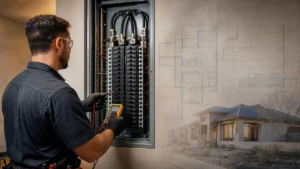
Homes often change faster than their electrical systems. A spare bedroom becomes an office. The garage gains a freezer, compressor, and power tools. A portable heater runs in one room while kitchen appliances, computers, and entertainment equipment operate elsewhere.
When demand exceeds what one circuit—or the wider electrical service—can safely support, warning signs begin to appear. Some are inconvenient, such as repeated breaker trips. Others, including heat, burning odors, or damaged devices, require urgent attention.
An overloaded circuit is not always the same as an undersized electrical service. Proper diagnosis determines whether the solution is changing how equipment is used, adding a dedicated circuit, repairing a fault, installing a subpanel, or upgrading the panel and service.
Circuit Overload vs. Service-Capacity Problems
A branch circuit supplies a specific group of outlets, lights, or equipment. It can be overloaded even when the home has plenty of total service capacity.
The electrical service supplies the home as a whole. A service-capacity problem occurs when the calculated demand of connected loads exceeds what the service can safely provide.
The panel also has a third limitation: physical circuit space. Adding a subpanel may create more breaker spaces, but it does not automatically increase total service capacity.
This distinction matters because each condition has a different solution.
8 Warning Signs of an Overloaded Electrical System
1. A Breaker Trips Repeatedly
A breaker may trip when too many high-demand devices operate on the same circuit. For example, a portable heater, vacuum, and hair dryer may exceed what one branch circuit can carry.
Repeated trips can also point to a short circuit, ground fault, damaged appliance, loose connection, or failing equipment. Do not assume the breaker is defective and replace it with a larger one. Breaker and conductor sizing must remain coordinated.
2. Lights Dim When Appliances Start
A slight, brief change may occur when some motors start, but noticeable or recurring dimming deserves investigation. The issue may involve voltage drop, shared circuits, poor connections, equipment starting current, service capacity, or the utility supply.
Write down which lights dim and which appliance starts at the same moment. That pattern gives the electrician useful diagnostic information.
3. Outlets, Switches, or Plugs Feel Hot
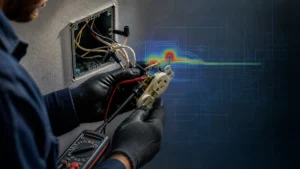
Electrical devices should not become unusually hot during normal use. Heat may indicate excessive current, a loose connection, a worn receptacle, damaged wiring, or a poor plug connection.
Stop using hot or discolored equipment. Heat and discoloration can be signs of a loose electrical connection, so do not remove the cover plate or touch the electrical panel to search for the source.
4. You Smell Burning Plastic or See Discoloration
A hot-plastic odor, darkened outlet, melted plug, or scorch mark is a serious warning. The problem may be local to one device, but it can also indicate damage inside the box or circuit.
If you see smoke or fire, leave and call 911. If you suspect active overheating, avoid touching the equipment and contact a qualified electrician for urgent guidance.
5. Extension Cords and Power Strips Have Become Permanent
One of the clearest signs that a home lacks convenient electrical capacity is a maze of cords feeding everyday equipment.
Common trouble spots include:
- Home offices
- Entertainment centers
- Kitchens
- Garages and workshops
- Bedrooms with portable heaters or window units
- Outdoor living areas
- Holiday-lighting setups
Power strips create more connection points; they do not create more circuit capacity. Properly placed outlets and switches may reduce cord dependence, but connecting strips together or running cords under rugs and through doorways adds risk without solving the shortage.
6. Large Appliances Share General-Purpose Circuits
Equipment with significant or continuous demand may need a dedicated circuit. Problems can arise when freezers, microwaves, portable air conditioners, heaters, pumps, shop tools, or other loads are added wherever an outlet happens to be available.
The electrician should review equipment ratings, circuit size, wiring, and the loads already connected before deciding whether a dedicated circuit is needed.
7. The Panel Is Full or Has Questionable Additions
A panel with no usable spaces can make future projects difficult. Crowded wiring, makeshift changes, or unclear labeling can also indicate that additions were made without a complete plan.
Do not remove the panel cover to inspect it yourself. An electrician can determine whether the panel is serviceable, whether approved breaker arrangements are available, and whether the calculated service capacity supports more circuits.
8. New Equipment Cannot Be Added Without Compromises
If every proposed improvement leads to moving loads, giving up another circuit, or installing temporary wiring, the home may need a broader electrical plan.
Projects that should trigger a capacity review include:
- EV chargers
- Larger HVAC equipment or heat pumps
- Electric ranges or water heaters
- Hot tubs and pools
- Home additions
- Garage workshops
- Outdoor kitchens
- Solar, batteries, or backup-power equipment
Evaluate the system before purchasing equipment. A load calculation can identify constraints while options are still open.
What Not to Do When a Circuit Is Overloaded
Some quick fixes are dangerous because they defeat or avoid the system’s protection.
Never:
- Replace a breaker with a higher rating without a complete professional evaluation
- Hold or tape a breaker in the on position
- Keep resetting a breaker that trips repeatedly
- Use an adapter to defeat a grounding connection
- Connect several power strips or extension cords together
- Run cords under rugs, through walls, or across water
- Open the electrical panel and tighten connections yourself
- Treat heat, buzzing, sparks, or burning odors as normal
Breakers are warning devices as well as protective devices. A trip is a reason to identify the cause.
How an Electrician Diagnoses the Problem
The evaluation may include:
- Reviewing which equipment operates when the symptom occurs
- Mapping the affected outlets, lights, and appliances to the circuit
- Inspecting accessible devices and wiring for heat or damage
- Testing voltage and circuit behavior
- Checking breaker and conductor compatibility
- Reviewing panel condition and available spaces
- Performing a load calculation when service capacity is in question
- Identifying unapproved or poorly documented additions
The outcome should distinguish an immediate repair from a capacity improvement.
Possible Solutions
Change How Loads Are Used
When the wiring and equipment are sound, moving a portable load to a different suitable circuit or avoiding simultaneous operation may resolve a limited problem. This is not appropriate when there is heat, damage, recurring trips, or an unknown cause.
Add a Dedicated Circuit
A new dedicated circuit can supply equipment that should not share a heavily used general-purpose circuit, provided the panel and service have capacity.
Replace Damaged Devices or Wiring
Worn receptacles, failed breakers, loose connections, or damaged conductors require repair regardless of overall service size.
Install a Subpanel
A subpanel may add circuit spaces or improve distribution to a garage, addition, or workshop. It does not create additional total service capacity.
Replace the Panel
Panel replacement may be appropriate when the existing panel is damaged, obsolete, unreliable, or unsuitable for the needed circuits. The service size may remain the same if capacity is adequate.
Upgrade the Electrical Service
When the calculated demand exceeds available capacity, the project may involve the panel, service conductors, meter equipment, grounding, permits, inspection, and utility coordination.
Frequently Asked Questions
Why does my breaker trip only in the summer?
Seasonal loads such as air conditioning, fans, pumps, refrigeration, or outdoor equipment may increase circuit demand. Heat, equipment condition, and connections may also contribute. Diagnosis should focus on the affected circuit and operating pattern.
Is a 200-amp service always the solution?
No. The correct service size comes from the home’s calculated demand and planned loads. Some problems require only a repair or dedicated circuit.
Will adding a subpanel stop overloaded circuits?
Not by itself. A subpanel adds distribution space. It does not increase the rating of existing branch circuits or the total service capacity.
Can a power strip prevent an overload?
No. A strip may contain overload protection for the strip itself, but it does not increase the capacity of the branch circuit supplying it.
Why is the outlet hot if the breaker did not trip?
Localized resistance, a loose connection, worn contacts, or a damaged plug can create heat without immediately exceeding the breaker’s trip threshold. Stop using the device and have it evaluated.
Get the Right Fix for the Actual Load Problem
An overloaded circuit, damaged connection, full panel, and undersized service are different conditions. Pro Power Services can inspect the system, calculate electrical demand, and explain the appropriate options for homes across Midland, Odessa, and surrounding West Texas communities.
Learn more about our home electrical repair services, review our electrical services, or request an estimate. You can also call (432) 955-5255.