Most homeowners do not think about their local Seminole residential electrician until a breaker trips, a light flickers, or an outlet stops working. By then, the visible symptom may be only one part of the problem.
A home electrical safety inspection gives you a clearer picture of the system’s condition before you commit to a remodel, buy a major appliance, sell the property, or wait for a warning sign to get worse. The electrician evaluates accessible equipment, tests key safety devices, identifies concerns, and explains which findings need immediate attention and which can be planned for later.
An inspection cannot predict every future failure or see through every finished wall. What it can do is replace guesswork with professional observations and practical next steps.
When Should You Schedule a Home Electrical Safety Inspection?
There is no single schedule that fits every property. The home’s age, equipment, maintenance history, symptoms, and planned improvements all matter.
An inspection is especially useful when:
- You are buying or preparing to sell a home
- Breakers trip repeatedly or fuses blow
- Lights flicker, dim, or pulse
- Outlets or switches feel warm, buzz, or show discoloration
- You smell burning plastic or notice an unexplained electrical odor
- The property has experienced water intrusion, storm damage, or a nearby lightning event
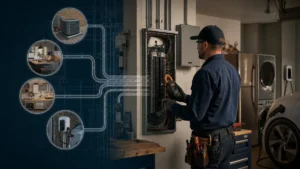
- You are planning a remodel, addition, EV charger, hot tub, workshop, or major appliance
- The panel is full and you need additional circuits
- You rely heavily on extension cords or power strips
- Previous electrical work has no clear documentation
- The home has older wiring or equipment that has not been evaluated recently
If there is active smoke, fire, arcing, or intense heat, do not wait for a routine appointment. Leave the area and contact emergency services.
What Does a Residential Electrical Inspection Cover?
The scope should be explained before work begins. A general safety inspection is different from a code inspection for new construction, a real estate home inspection, or troubleshooting one specific failure.
A professional residential electrical inspection may include the following areas.
Electrical Service and Main Panel
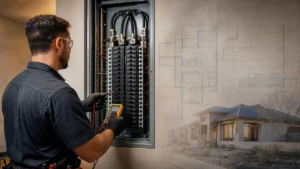
The electrician starts with the equipment that receives and distributes power through the home. Accessible components may be checked for:
- Visible damage, corrosion, moisture, scorching, or overheating
- Proper enclosure condition and panel access
- Breakers that appear damaged, incorrectly sized, or incompatible
- Crowded or questionable circuit arrangements
- Missing covers, open spaces, or damaged knockouts
- Clear and useful circuit labeling
- Signs that the service or panel may not support planned loads
- Grounding and bonding concerns visible within the inspection scope
The electrician may recommend a load calculation when you plan to add equipment or when the existing service appears heavily utilized. A panel does not need replacement merely because it is old; its design, condition, installation, capacity, and serviceability all matter.
Accessible Wiring and Connections
Most wiring is hidden, so an inspection focuses on accessible areas and evidence of problems. The electrician may examine wiring at panels, receptacles, switches, fixtures, junction boxes, attics, garages, or other reachable locations included in the scope.
Potential concerns include:
- Damaged or deteriorated insulation
- Loose, overheated, or corroded connections
- Improper splices or open junction boxes
- Unsupported or exposed wiring
- Wiring damaged by moisture, pests, fasteners, or remodeling
- Extension cords used as permanent wiring
- Older wiring methods that need closer evaluation
Finding older wiring does not automatically mean the entire home must be rewired. The electrician should explain the observed condition, the risk, and the options rather than making a recommendation based only on age.
Outlets, Switches, and Fixtures
Everyday devices can reveal important clues about the circuit behind them. The inspection may look for:
- Loose or damaged receptacles
- Cracked plates or exposed openings
- Heat, buzzing, discoloration, or burn marks
- Outlets that no longer hold plugs securely
- Incorrect polarity or grounding concerns identified through testing
- Fixtures that are damaged or improperly supported
- Locations where additional outlets could reduce dependence on extension cords
The inspector should not declare a device safe based on appearance alone when testing or further evaluation is appropriate.
GFCI and AFCI Protection
Ground-fault circuit interrupters and arc-fault circuit interrupters provide different types of protection. Where present and within the inspection scope, they may be tested using the device controls and appropriate test equipment.
An inspection may identify:
- A GFCI or AFCI that does not trip or reset correctly
- A protected location that is not readily apparent
- Devices that are damaged or at the end of their service life
- Areas where current requirements or a planned remodel may call for updated protection
Code requirements depend on the location, type of work, adopted code, and local rules. An electrician should distinguish between a dangerous defect, a recommended improvement, and an upgrade triggered by new work.
Grounding and Bonding
Grounding and bonding help create an effective path for fault current and keep conductive parts at the proper electrical potential. They are related, but they are not the same thing.
The electrician may assess visible grounding electrodes, bonding connections, panel configuration, and other accessible components. Problems in this area are not appropriate for homeowner experimentation; correction requires an understanding of the entire service arrangement.
Outdoor, Garage, and Damp-Location Equipment
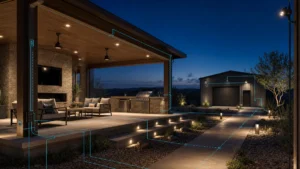
West Texas properties often include installations for residential lighting and other decorations like exterior outlets, detached structures, shops, pumps, landscape lighting, or equipment exposed to intense sun, dust, wind, and storms.
The inspection may check for:
- Cracked or missing weather-resistant covers
- Moisture or corrosion
- Damaged conduit or exposed cable
- GFCI protection where applicable
- Improperly supported exterior wiring
- Unsafe temporary cords feeding permanent equipment
- Problems at garages, workshops, sheds, or outdoor living spaces
Smoke and Carbon Monoxide Alarm Connections
If hardwired alarms are included in the agreed scope, the electrician can examine their power connections and interconnection. Testing, replacement age, battery requirements, and placement should follow the alarm manufacturer’s instructions and applicable safety requirements.
An electrical inspection does not replace regular homeowner testing of alarms or the work of other safety professionals when broader fire-protection evaluation is needed.
How an Electrician Prioritizes the Findings
A useful inspection should result in an understandable explanation—not a pile of technical terms. Findings can generally be organized by urgency.
| Priority | What it means | Typical next step |
|---|---|---|
| Immediate hazard | Evidence of active overheating, arcing, exposed energized parts, severe damage, or another dangerous condition | De-energize or isolate the affected equipment when safely possible and arrange prompt repair |
| Repair soon | A failed safety device, damaged outlet, loose connection, moisture problem, or recurring circuit issue | Schedule corrective work before the condition worsens |
| Plan an upgrade | Limited capacity, aging but serviceable equipment, insufficient circuit spaces, or improvements needed for a future project | Review options, budget, and timing |
| Monitor or maintain | No active defect, but labeling, testing, documentation, or periodic observation would improve reliability | Add the item to the homeowner maintenance plan |
Ask for photographs or written descriptions when practical. A good report should tell you what was observed, why it matters, and what action is recommended.
What an Electrical Safety Inspection Does Not Guarantee
Clear expectations protect the homeowner and the electrician. A visual and instrument-based inspection has limits.
It may not reveal:
- Wiring completely hidden behind walls, ceilings, or finished surfaces
- An intermittent fault that does not occur during the appointment
- Damage inside equipment that is not opened under the agreed scope
- Future component failures
- Utility-side conditions outside the electrician’s responsibility
- Problems in systems excluded from the inspection
Be cautious with language claiming that an electrician has “certified the entire home safe.” A more accurate outcome is that the electrician inspected an agreed scope, documented the conditions observed at that time, and identified recommended actions.
How to Prepare for the Inspection
A few simple steps make the appointment more productive:
- Write down the symptoms. Include when they happen, which rooms are affected, and what equipment is operating.
- Gather available records. Permits, invoices, panel schedules, remodel plans, and appliance specifications may help.
- List future projects. Mention an EV charger, HVAC replacement, kitchen remodel, hot tub, shop, generator, or addition.
- Provide safe access. Clear normal household storage away from the panel, outlets, attic access, and equipment being inspected.
- Identify sensitive equipment. Tell the electrician about medical devices, servers, alarms, aquariums, or anything that requires careful outage planning.
- Prepare questions. Ask which items are urgent, which are optional, and whether different repair approaches are available.
Do not remove panel covers, open junction boxes, or pull devices from walls before the appointment.
Questions to Ask Before Approving Electrical Work
When the inspection identifies a problem, use these questions to understand the proposal:
- What condition did you observe?
- Is it an immediate hazard, a needed repair, or a recommended improvement?
- What is the likely cause?
- Does the repair affect only one device or the wider circuit?
- Are permits, an inspection, or utility coordination required?
- Will power need to be shut off, and for approximately how long?
- Are there repair and replacement options?
- What testing will be completed after the work?
- What documentation will I receive?
The lowest initial price is not always the lowest long-term cost. The goal is a clearly scoped repair that addresses the cause and leaves the system understandable.
Frequently Asked Questions
Is a home inspection the same as an electrical safety inspection?
No. A general home inspector reviews many building systems and may recommend further evaluation. A licensed electrician focuses on the electrical system and can perform specialized testing, diagnosis, and repairs within the agreed scope.
Does an older electrical panel automatically need replacement?
No. Age is one factor. The electrician should also consider the equipment’s condition, design, compatibility, capacity, damage history, and the home’s current electrical installation and planned loads.
Will the electrician inspect every wire in the house?
Most wiring is concealed. The inspection covers accessible equipment and any additional areas defined in the scope. Further investigation may be recommended when symptoms or visible evidence point to a hidden problem.
Should I schedule an inspection before a remodel?
Yes, especially when the project adds circuits or large electrical loads. Early planning helps determine whether the existing service and panel can support the work before walls are opened or equipment is purchased.
Can an inspection prevent every electrical fire?
No inspection can guarantee that a future failure will never occur. It can identify observable defects, failed safety devices, damaged components, and conditions that deserve correction.
Know What Your Home Needs Before Problems Escalate
A home electrical safety inspection should give you priorities, options, and a clearer understanding of the system—not vague fear or an automatic sales pitch. Pro Power Services evaluates residential electrical systems throughout Midland, Odessa, and surrounding West Texas communities.
Explore our electrical services, review our home electrical repair capabilities, or request an inspection estimate. You can also call (432) 955-5255.