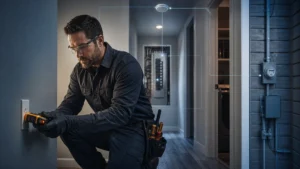
Lighting changes how a home looks, but its biggest impact is often how the home works. A poorly lit kitchen makes food preparation harder. Glare on a television makes the living room uncomfortable. A dark walkway or garage creates a daily safety problem. One bright ceiling fixture rarely solves every need.
The most useful residential lighting upgrades combine three layers: general light for the room, task light where work happens, and accent light that adds depth or highlights a feature. Controls, color temperature, fixture placement, and electrical compatibility matter as much as fixture style.
Here are nine practical ways to improve your lighting without turning the project into an unnecessary whole-house renovation.
Plan the Room Before Shopping for Fixtures
Start with activities, not products. Walk through the room at different times of day and identify where you need to:
- Prepare food
- Read or work
- Apply makeup or shave
- Walk through the space safely
- Clean or organize
- Watch television
- Display artwork or architectural features
- Enter the home after dark
Then decide what is wrong with the existing lighting. Is the room too dim, too harsh, uneven, difficult to control, or simply outdated? The answer helps determine whether you need a new fixture, a better lamp, a dimmer, additional circuits, or a complete layout change.
9 Practical Home Lighting Upgrades
1. Replace Weak or Glary Fixtures With Better LED Lighting
High-efficiency LED lighting is available in many fixture types, brightness levels, color temperatures, and beam patterns. A good upgrade should provide enough light without producing harsh glare or dark corners.
Before replacing a fixture, consider:
- The room’s size and ceiling height
- The fixture’s light output and distribution
- Whether the light source is replaceable or integrated
- Color temperature
- Color quality
- Dimming compatibility
- Damp- or wet-location requirements
- Enclosed-fixture ratings when applicable
Do not choose solely by wattage. With LED products, light output and fixture performance are more useful than comparing power use to an old incandescent bulb.
2. Add Dimmers Where One Brightness Level Is Not Enough
A dining room, bedroom, living room, or kitchen may need bright light for cleaning and softer light later in the evening. A compatible dimmer switch can provide both without installing separate fixtures.
The dimmer, light source, driver, circuit, and control arrangement must be compatible. Mismatched products can cause flickering, buzzing, limited dimming range, delayed startup, or lights that never shut off completely.
If several switches control the same light, tell the electrician before selecting devices. Multi-location controls require the correct arrangement.
3. Install Under-Cabinet Task Lighting
Upper cabinets often block ceiling light and cast shadows directly onto kitchen counters. Under-cabinet lighting places light where food preparation and cleanup happen.
A clean installation considers:
- Continuous, even light instead of bright dots
- Concealed wiring and drivers
- Accessible controls
- Color that works with the ceiling and pendant lighting
- Glare from polished countertops
- Separate switching or dimming
The same idea can work in home offices, laundry rooms, workshops, display cabinets, and built-in desks.
4. Use Layered Lighting in Living and Gathering Spaces
One central fixture can make a large room look flat while leaving the edges dark. Layering several sources creates flexibility.
A living room might combine:
- A ceiling fixture or recessed lighting for general illumination
- Floor or wall-mounted lights for reading
- Accent lighting for artwork or shelving
- Lamps for a warmer evening atmosphere
- Separate controls for each layer
The goal is not to fill the ceiling with fixtures. It is to give each light a job and let the homeowner use only the layers needed at that moment.
5. Improve Bathroom and Vanity Lighting
A bright fixture directly above the mirror can create shadows under the eyes and chin. Lighting from both sides of the face or a well-designed mirror fixture may provide more even illumination.
Bathroom planning should also consider:
- Damp- or wet-location fixture ratings
- Shower and tub clearances
- GFCI protection where applicable
- Separate controls for vanity, shower, general, and night lighting
- Color quality for grooming
- Low-level lighting for nighttime use
Bathroom electrical work must account for moisture and the location of fixtures, controls, and receptacles.
6. Add Motion or Occupancy Controls in the Right Places
Automatic controls can be useful in pantries, closets, laundry rooms, garages, hallways, utility spaces, and selected outdoor areas. They improve convenience and help ensure lights are not left on unnecessarily.
Placement matters. A poorly located sensor may miss someone working quietly, turn on when people pass outside the room, or leave lights on longer than expected.
Choose the control based on the room’s use:
- Occupancy sensor: Turns lights on automatically and off after the area is vacant.
- Vacancy sensor: Requires manual-on operation but turns lights off automatically.
- Motion sensor: Common for exterior or security-oriented lighting.
- Timer: Useful when a predictable operating period is preferred.
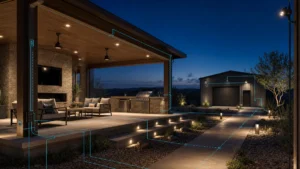
7. Upgrade Exterior Entry and Path Lighting
Outdoor, security, and landscape lighting should help people identify steps, walkways, addresses, doors, and obstacles without shining excessive light into windows or neighboring properties.
Useful locations include:
- Front and back doors
- House numbers
- Driveways and gates
- Steps and changes in elevation
- Walkways
- Patios and outdoor kitchens
- Garage doors
- Trash, utility, or equipment areas
Use fixtures and wiring methods suitable for the environment. West Texas sun, heat, dust, wind, and storms can quickly expose weak exterior products or poor installation.
8. Add Smart Lighting Only Where It Solves a Real Problem
Smart switches, bulbs, and control systems can provide schedules, scenes, remote control, and integration with other home systems. They are most useful when they simplify a recurring task.
Good applications include:
- Turning off several areas from one control
- Scheduling exterior lighting
- Creating evening or entertainment scenes
- Controlling hard-to-reach fixtures
- Simulating occupancy while traveling
- Integrating selected lights with security or automation
Before buying devices, confirm wiring, box space, load type, network coverage, multi-location control, and platform compatibility. A conventional dimmer may be the better choice when remote features add complexity without value.
9. Give Garages and Workshops Real Task Lighting
Garages are often lit by one or two small fixtures that leave shadows over workbenches, storage, and vehicle areas. Better lighting improves visibility for repairs, cleaning, organization, and tool use; a professional indoor lighting installation can also address circuit, control, and fixture-placement needs together.
Plan around:
- Workbench placement
- Garage-door tracks and open-door positions
- Tall storage
- Vehicle hoods and work areas
- Color and surface reflectance
- Separate task and general-lighting controls
- Fixture protection from impact or dust
- Dedicated circuits for tools or equipment when needed
Do not confuse brighter lighting with increased electrical capacity. A workshop may need both improved fixtures and correctly designed power circuits.
How to Choose Light Color and Brightness
Two fixtures can use similar power and still make a room feel completely different.
Color Temperature
Warmer light often feels comfortable in bedrooms, dining areas, and living rooms. Neutral or cooler light may help visibility in garages, utility rooms, and detailed workspaces. Mixing noticeably different color temperatures in one open area can make the result look accidental.
Color Quality
Light sources vary in how accurately colors appear. Kitchens, closets, bathrooms, artwork, and product displays often benefit from better color rendering.
Brightness and Distribution
More light is not always better. Glare, reflections, and bright spots can make a room less comfortable. Good design spreads light across the needed surfaces and uses controls to adjust it.
How to Prioritize Lighting Upgrades on a Budget
Start where the current lighting creates the most inconvenience or risk.
- Fix damaged, flickering, or unsafe fixtures and controls.
- Improve dark stairs, entrances, walkways, and work areas.
- Add task lighting in kitchens, bathrooms, offices, and garages.
- Install compatible dimming or separate controls.
- Replace the most frequently used inefficient or poor-performing fixtures.
- Add accent and smart features after the functional lighting works well.
Combining several fixture or control changes into one planned visit may reduce disruption and help the electrician coordinate the overall result.
Frequently Asked Questions
Can every LED bulb be used with a dimmer?
No. The lamp or fixture must be designed for dimming, and the dimmer must be compatible with the load. Check product requirements before installation.
Why do my LED lights flicker?
Possible causes include incompatible controls, failing drivers, loose connections, voltage problems, or a product defect. The pattern and affected fixtures help an electrician diagnose the source.
Do recessed lights work in every ceiling?
No. Ceiling depth, insulation, framing, air sealing, fixture rating, wiring access, and the desired beam pattern all affect the installation.
Are smart bulbs better than smart switches?
They solve different problems. Smart bulbs offer individual lamp control but can lose functionality when someone turns off the wall switch. Smart switches control the circuit but must match the wiring and load.
Can I replace a light fixture myself?
Fixture replacement can expose energized conductors, damaged boxes, improper support, or wiring problems. If you are not qualified and equipped to perform the work safely, hire an electrician.
Make Every Light Serve a Purpose
The best lighting plan improves visibility, comfort, control, and the way each room is used. Pro Power Services installs and upgrades residential lighting throughout Midland, Odessa, and surrounding West Texas communities.
Explore our residential electrical services or request a lighting estimate. You can also call (432) 955-5255.